Adaptive AI Agent Orchestration: The Future of Complex Software Development
Explore the next frontier in software development: adaptive AI agent orchestration. Beyond simple task automation, discover how intelligent, self-optimizing multi-agent systems dynamically adapt to evolving requirements and complex software challenges.
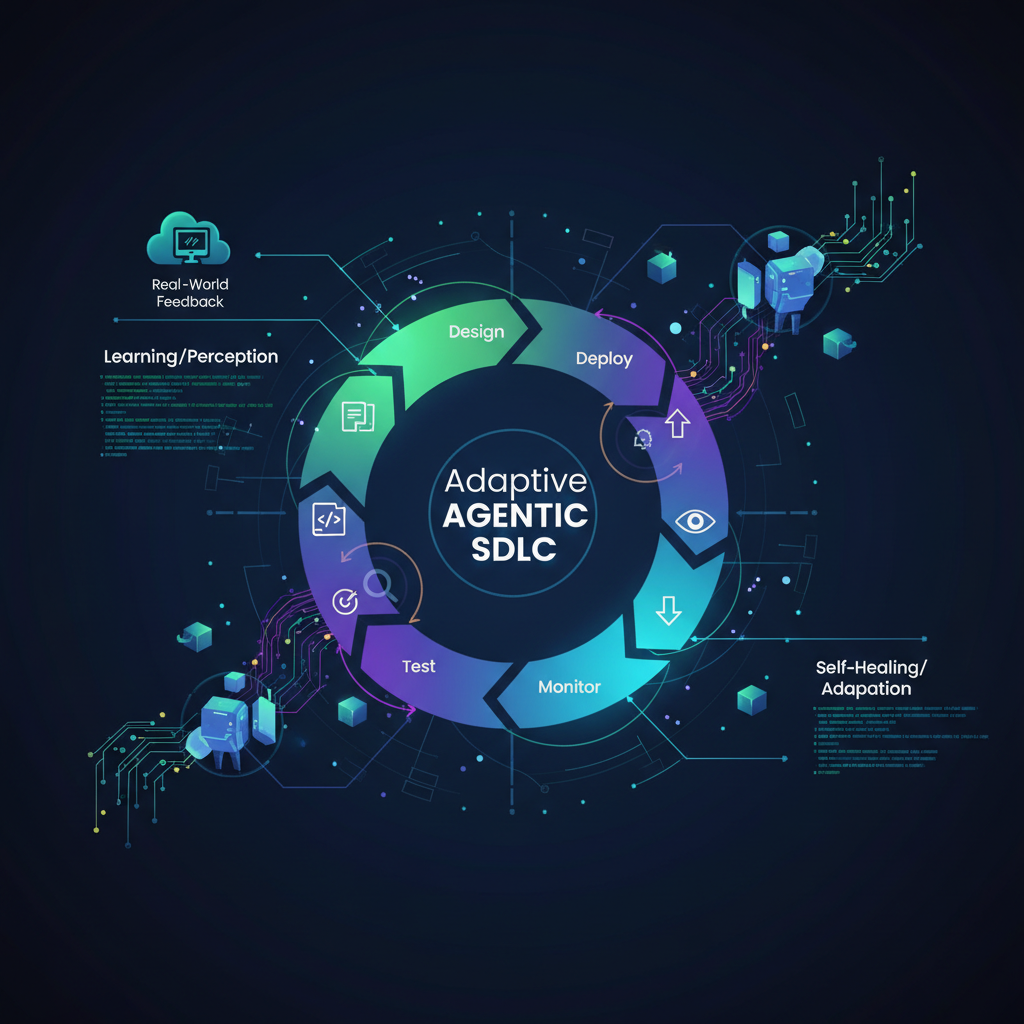
The landscape of software development is undergoing a profound transformation, driven by the emergence of AI agents. Initially, the focus was on individual agents automating specific tasks – a "code generator agent" here, a "test writer agent" there. While valuable, this approach often falls short when confronted with the inherent dynamism and complexity of real-world software systems. The true frontier, and arguably the most exciting challenge, lies in Adaptive Agentic Orchestration for Complex Software Systems.
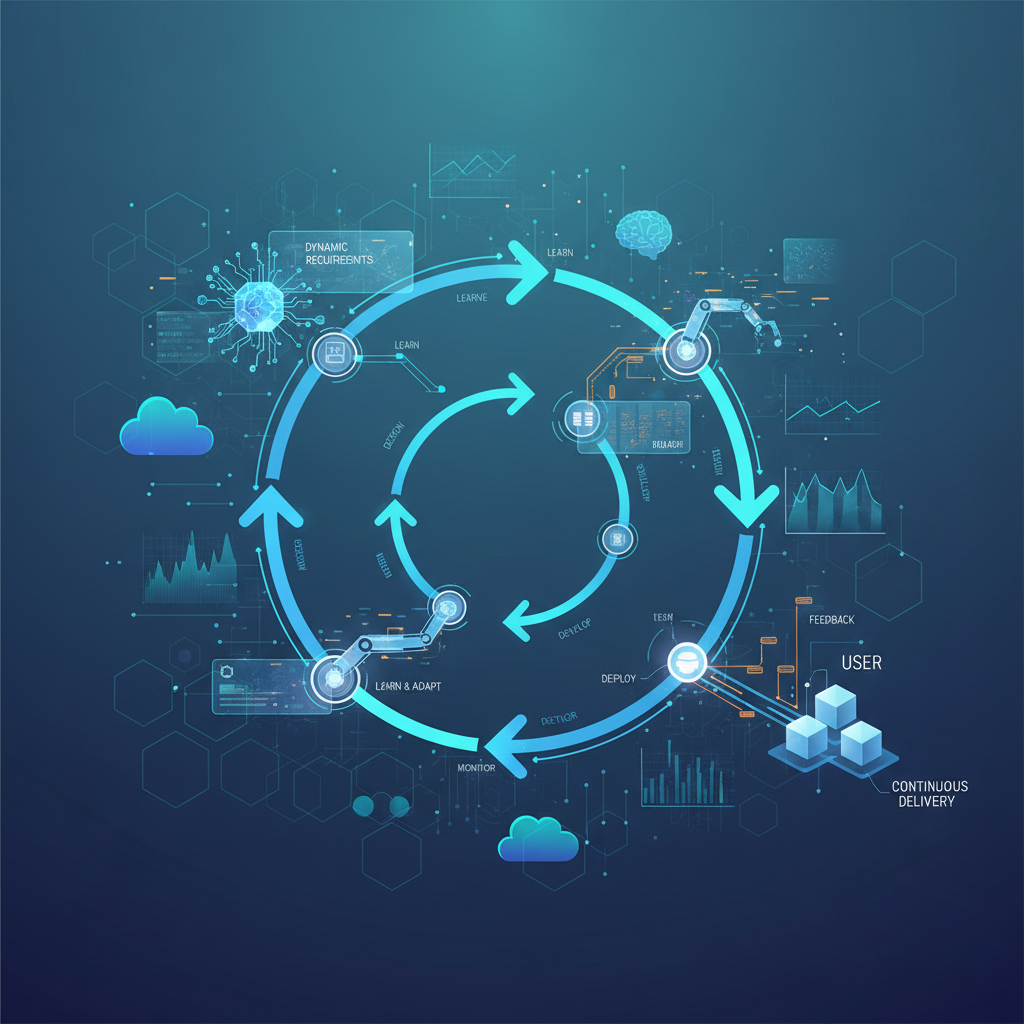
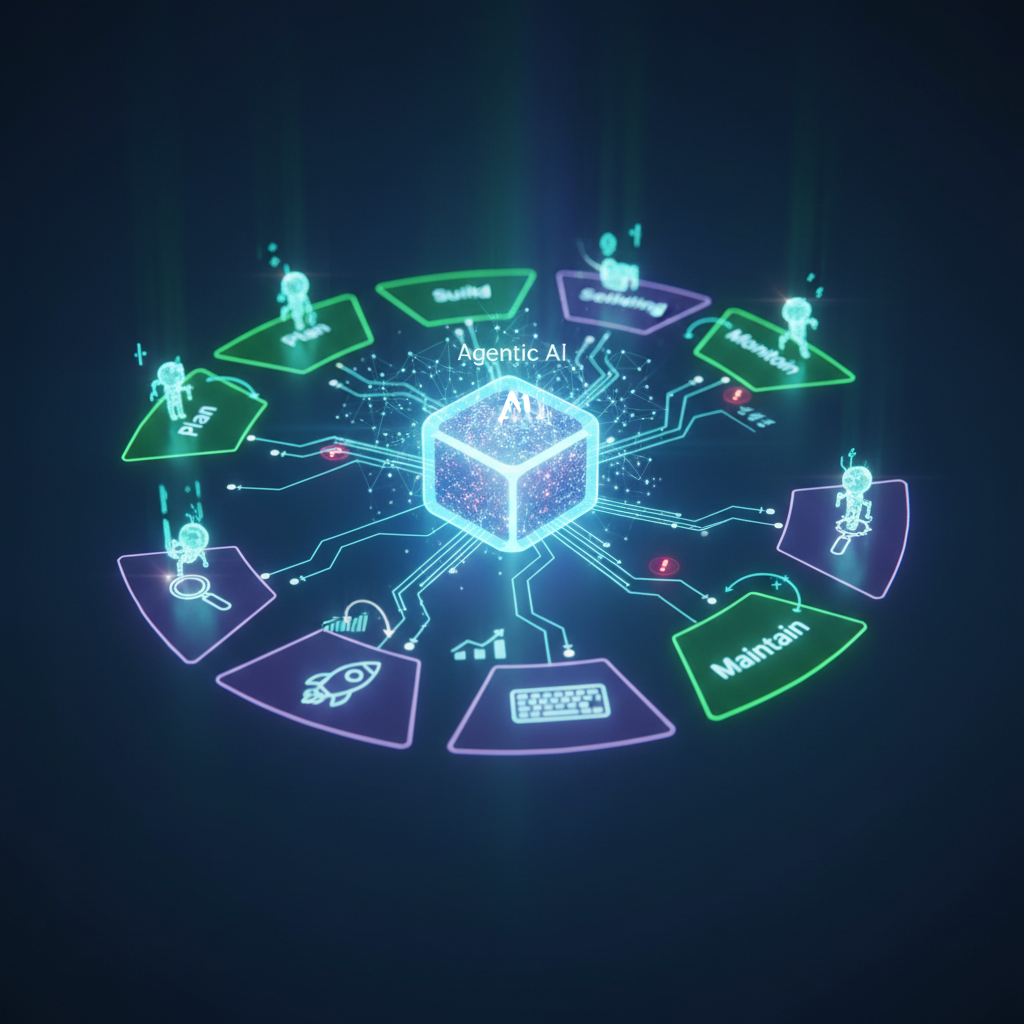
This isn't just about chaining agents together in a rigid sequence. It's about building intelligent, self-optimizing multi-agent systems that can dynamically adapt to evolving requirements, unforeseen challenges, and the non-linear nature of software development. Imagine a symphony orchestra where each musician (agent) not only plays their part flawlessly but also listens, anticipates, and adjusts their performance in real-time based on the overall flow, conductor's subtle cues (orchestrator), and even unexpected changes in the score. This is the paradigm shift we're witnessing, moving from static automation to intelligent, adaptive collaboration.
Why Adaptive Orchestration is the Next Big Leap
The timing for this evolution couldn't be more critical. Several factors converge to highlight the urgency and potential of adaptive agentic orchestration:
- Beyond Monolithic Agents to Agent Teams: Complex software demands a diverse set of skills. A single agent, no matter how powerful, cannot encompass the breadth of knowledge required for design, coding, testing, security, deployment, and maintenance. Adaptive orchestration facilitates the creation of specialized agent teams, where each member contributes unique capabilities, much like a human development team.
- Tackling Real-World Software's Dynamic Nature: Software development is rarely a straight line. Requirements shift, new bugs emerge, architectural decisions have cascading effects, and performance bottlenecks surface unexpectedly. Traditional, static workflows crumble under this dynamism. Adaptive orchestration empowers the system to react intelligently, re-plan, and re-allocate resources in real-time.
- The Rise of "AI-Native" Development: As AI becomes deeply embedded in every facet of the development lifecycle, the orchestration layer itself must be AI-driven. This means moving beyond simple scripting to agents making strategic decisions about collaboration, escalation, and adaptation based on learned patterns and real-time data.
- Scaling Agentic Solutions: For practitioners, this is where agentic solutions move beyond proof-of-concept to practical, scalable deployments. It addresses fundamental questions: How do agents handle conflicting information? How do they learn from failures? How do they seamlessly integrate with existing human workflows? Adaptive orchestration provides the framework for answering these.
- A Fertile Research Frontier: This domain sits at the intersection of multi-agent systems, reinforcement learning, natural language understanding, and robust system design. It offers rich opportunities for innovation and pushes the boundaries of what AI can achieve in complex engineering domains.
Key Pillars of Adaptive Agentic Orchestration
To achieve true adaptivity, several core aspects must be meticulously designed and implemented:
1. Dynamic Task Decomposition and Allocation
Traditional approaches often rely on a human or a "master agent" to pre-define and break down tasks. Adaptive orchestration elevates this to an intelligent, dynamic process.
- Goal-Oriented Planning: Instead of a fixed plan, agents collaboratively define sub-goals and dependencies. An orchestrator, or a group of planning agents, analyzes the high-level objective (e.g., "Implement user authentication with OAuth2") and dynamically generates a sequence of sub-tasks.
- Capability Matching: The orchestrator maintains a registry of agent capabilities. When a task emerges (e.g., "Design database schema for user profiles"), it identifies the most suitable agent (e.g., a "Database Design Agent" with expertise in SQL and NoSQL, or a "Security Agent" to review schema for vulnerabilities). This isn't just about keywords; it involves understanding the semantic meaning of the task and the agent's actual skill set.
- Resource Management and Prioritization: Beyond capabilities, the orchestrator considers current agent load, available computational resources, and task urgency. A critical bug fix might preempt a new feature development, and the orchestrator would re-allocate agents accordingly.
Example: Imagine a request: "Add a new user profile page with editable fields and secure password reset."
- Orchestrator receives request.
- Planning Agents break it down:
- Design UI/UX for profile page.
- Implement frontend components.
- Design backend API for user data.
- Implement backend API logic.
- Integrate with existing authentication service.
- Implement password reset flow (frontend & backend).
- Write unit and integration tests.
- Deploy to staging.
- Capability Matching & Allocation:
- "UI/UX Agent" gets design task.
- "Frontend Dev Agent" gets frontend component tasks.
- "Backend Dev Agent" gets API design and implementation.
- "Security Agent" reviews password reset flow design.
- "Test Agent" generates tests for all new components.
- "DevOps Agent" handles deployment.
- Dynamic Adjustment: If the "Security Agent" finds a vulnerability in the password reset design, the orchestrator pauses implementation, re-assigns the "Backend Dev Agent" and "Security Agent" to collaborate on a revised design, and then resumes.
2. Intelligent Communication and Collaboration Protocols
Effective collaboration hinges on rich, contextual communication, far beyond simple message passing.
- Shared Context and Knowledge Bases: Agents need a common understanding of the project. This is achieved through a shared knowledge base, often powered by vector databases. Code, documentation, design documents, past decisions, and even chat logs are embedded and stored. Agents can query this knowledge base to understand the current state, historical context, and relevant architectural patterns.
python
# Example of an agent querying a shared knowledge base
query = "What are the existing database schemas related to user profiles?"
relevant_docs = knowledge_base.query(query, k=5)
# relevant_docs might contain embeddings of SQL DDL, ORM models, and design docs
# Example of an agent querying a shared knowledge base query = "What are the existing database schemas related to user profiles?" relevant_docs = knowledge_base.query(query, k=5) # relevant_docs might contain embeddings of SQL DDL, ORM models, and design docs - Negotiation and Conflict Resolution: Disagreements are inevitable. If a "Frontend Agent" proposes a data structure that conflicts with a "Backend Agent's" design, the orchestrator doesn't just pick one. It facilitates negotiation, perhaps by:
- Invoking a "Referee Agent" to analyze both proposals against project guidelines.
- Presenting both options to a human developer with a summary of pros and cons.
- Suggesting a compromise based on historical success patterns.
- Structured Feedback Loops: Agents provide structured feedback upon task completion or encountering issues. This feedback (e.g., "Task X completed successfully, but encountered a dependency issue with Y," or "Proposed solution A, but alternative B might be more performant due to Z") is crucial for the orchestrator to learn and adapt future strategies.
3. Self-Correction and Learning from Experience
A truly adaptive system must be able to learn from its successes and failures.
- Failure Detection and Recovery: Agents constantly monitor each other. If a "Test Agent" reports critical failures after a "Code Agent" submits code, or a "Deployment Agent" encounters an error, the orchestrator springs into action. Recovery mechanisms include:
- Retrying with different parameters: If a build fails due to a transient network issue, retry.
- Assigning a different agent: If one "Code Agent" consistently produces buggy code for a specific module, assign another.
- Escalating to human intervention: For complex or novel failures, the system intelligently hands off to a human, providing all necessary context.
- Spawning debugging agents: A specialized "Debugging Agent" might be launched to analyze logs, trace execution, and pinpoint the root cause of an error.
- Reinforcement Learning for Strategy Optimization: This is where the "adaptive" truly shines. The orchestration layer can be trained using reinforcement learning (RL) to optimize its strategies.
- Rewards: Successful deployments, passing all tests, faster delivery times, reduced human intervention, positive performance metrics.
- Penalties: Failed tests, critical bugs, delays, human intervention for easily solvable problems. Over time, the orchestrator learns which agent configurations, communication patterns, or task decomposition strategies lead to the best outcomes.
- Adaptive Resource Allocation: Based on learned patterns, the orchestrator can dynamically allocate more computational resources or prioritize the attention of other agents to tasks where agents are struggling or where historical data suggests higher complexity.
4. Human-in-the-Loop Integration
While the goal is autonomy, humans remain indispensable. The key is intelligent collaboration.
- Intelligent Handoffs: The system must know when and how to involve a human. Instead of dumping raw logs, it should provide:
- Clear problem statements.
- Contextual information (relevant code, logs, agent discussions).
- Proposed solutions or decision points.
- Specific questions requiring human expertise.
- Explainability (XAI): For trust and debugging, the orchestration needs to provide clear audit trails and explanations for its decisions. Why was a particular agent chosen? Why did a task fail? Why was a specific code change proposed? This transparency is crucial for human oversight.
markdown
**Orchestrator Decision Log (Excerpt):**
- **Task:** Implement `User.reset_password()`
- **Agent Assigned:** `BackendDevAgent_V3` (Reason: Highest historical success rate for security-sensitive API tasks, recent training on OAuth2 flows).
- **Decision Point:** `SecurityAgent` flagged potential vulnerability in initial password reset token generation.
- **Action:** Initiated negotiation between `BackendDevAgent_V3` and `SecurityAgent`.
- **Outcome:** `BackendDevAgent_V3` revised token generation to use cryptographically secure random numbers and HMAC. `SecurityAgent` approved.
**Orchestrator Decision Log (Excerpt):** - **Task:** Implement `User.reset_password()` - **Agent Assigned:** `BackendDevAgent_V3` (Reason: Highest historical success rate for security-sensitive API tasks, recent training on OAuth2 flows). - **Decision Point:** `SecurityAgent` flagged potential vulnerability in initial password reset token generation. - **Action:** Initiated negotiation between `BackendDevAgent_V3` and `SecurityAgent`. - **Outcome:** `BackendDevAgent_V3` revised token generation to use cryptographically secure random numbers and HMAC. `SecurityAgent` approved. - Learning from Human Feedback: Every human correction, approval, or rejection is a valuable data point. This feedback is fed back into the system to refine agent behavior, improve orchestration strategies, and update the shared knowledge base.
5. Emerging Architectures and Frameworks
The field is rapidly evolving, giving rise to new architectural patterns and tools.
- Hierarchical Agent Architectures: This mirrors human organizations. A "meta-agent" or "chief orchestrator" oversees several "sub-orchestrators," each managing a team of specialized task agents (e.g., a "Frontend Orchestrator" managing UI/UX, Component, and Integration Agents).
- Decentralized Orchestration: Moving beyond a single central orchestrator, this explores systems where agents self-organize, negotiate, and coordinate in a distributed manner. Technologies like blockchain or distributed ledger technologies could provide trust and immutability for shared state and agreements between agents.
- Frameworks: Projects like AutoGen, CrewAI, and custom LLM-driven orchestrators are laying the groundwork. While many still focus on defining static workflows, their modularity and agent definition capabilities are crucial stepping stones toward truly adaptive systems. The next wave of these frameworks will embed dynamic planning, learning, and self-correction capabilities.
Practical Applications and Value for AI Practitioners
The promise of adaptive agentic orchestration extends across the entire software development lifecycle, offering tangible benefits:
- Automated Feature Development: Imagine an orchestrator receiving a high-level feature request ("Add real-time chat functionality"). It dynamically decomposes the task, assigns agents for frontend UI, backend API, database schema, testing, and deployment. As agents encounter issues (e.g., a database agent discovers an incompatible schema), the orchestrator adapts the plan, brings in relevant agents, and resolves conflicts, ultimately delivering a working feature.
- Proactive Bug Fixing and Maintenance: Instead of waiting for users to report bugs, an orchestrator can continuously monitor logs, performance metrics, and security scans. Upon detecting an anomaly (e.g., a sudden spike in error rates or a newly discovered CVE affecting a dependency), it dispatches debugging agents to diagnose, code agents to propose fixes, test agents to validate, and deployment agents to roll out the patch, all with minimal human intervention.
- Continuous Refactoring and Optimization: Agents can continuously analyze the codebase for technical debt, performance bottlenecks, or security vulnerabilities (e.g., "This function has high cyclomatic complexity," or "This query is causing a database bottleneck"). An orchestrator can then schedule and manage refactoring tasks, assigning agents to rewrite code, optimize queries, or update dependencies, ensuring the system remains healthy and efficient.
- Automated Migration and Upgrades: Complex tasks like upgrading major framework versions or migrating to a new cloud provider can be orchestrated. Agents can analyze dependencies, identify breaking changes, propose code modifications, run compatibility tests, and manage the phased rollout, adapting to unexpected issues during the process.
- Personalized Development Assistants: An orchestrator could manage a suite of agents tailored to a specific developer's preferences and workflow. It learns their coding style, preferred tools, and common challenges, proactively offering assistance, suggesting code snippets, identifying potential errors, or even generating boilerplate code based on context.
Challenges and Future Directions
While the potential is immense, significant challenges remain:
- Robustness and Reliability: Ensuring that these highly autonomous and adaptive systems don't enter unforeseen states or make catastrophic errors is paramount. The "hallucination" problem of LLMs, when applied to code generation or architectural decisions, could have severe consequences.
- Computational Overhead: The constant planning, communication, learning, and monitoring required for adaptive orchestration can be computationally intensive, potentially outweighing the benefits if not optimized.
- Evaluation Metrics: How do we objectively measure the "goodness" of an adaptive orchestration strategy? Beyond simple task completion, metrics like code quality, maintainability, security posture, and resilience need to be incorporated.
- Security and Trust: Granting autonomous agents access to sensitive codebases and deployment environments raises critical security concerns. Robust access controls, auditing, and mechanisms to prevent malicious or erroneous actions are essential.
- Ethical Considerations and Accountability: When an autonomous agent system makes a critical mistake (e.g., deploys a breaking change to production, or introduces a security vulnerability), who is responsible? Defining clear lines of accountability and establishing ethical guidelines for AI-driven development is crucial.
Conclusion
Adaptive Agentic Orchestration is not merely an incremental improvement; it's a paradigm shift in how we conceive and execute software development. It moves us beyond automating individual tasks to building truly intelligent, self-organizing software development teams powered by AI. For practitioners, embracing this field means unlocking unprecedented levels of automation, resilience, and efficiency in software creation, freeing up human developers to focus on higher-level creativity, problem-solving, and strategic decision-making. For enthusiasts, it represents a fascinating intersection of multi-agent systems, AI planning, and practical engineering challenges that will define the future of software. The journey has just begun, and the potential for innovation is boundless.