Self-Healing & Adaptive Agentic SDLC: The Future of Autonomous Software Development
Explore the revolutionary Self-Healing and Adaptive Agentic SDLC, where AI-driven multi-agent systems enable software to autonomously diagnose, optimize, and refactor itself, moving beyond traditional methodologies.
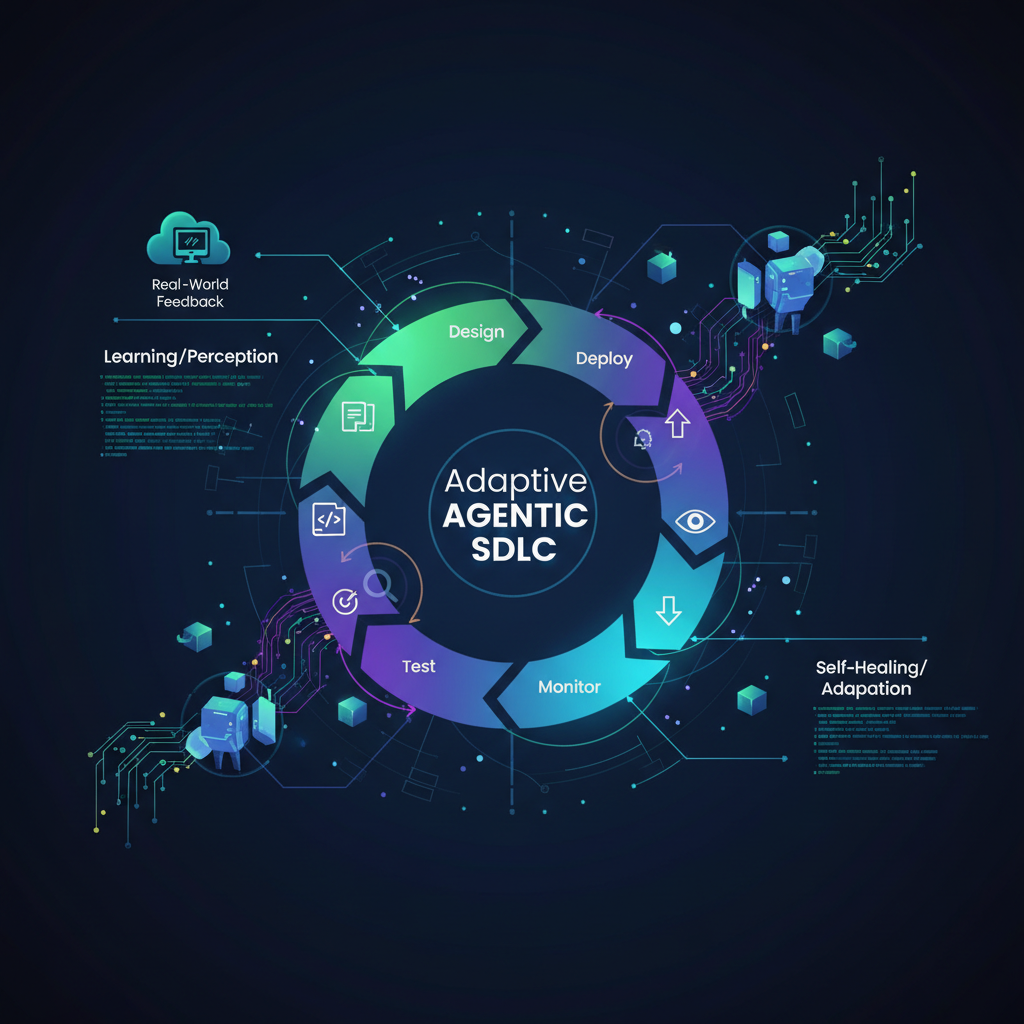
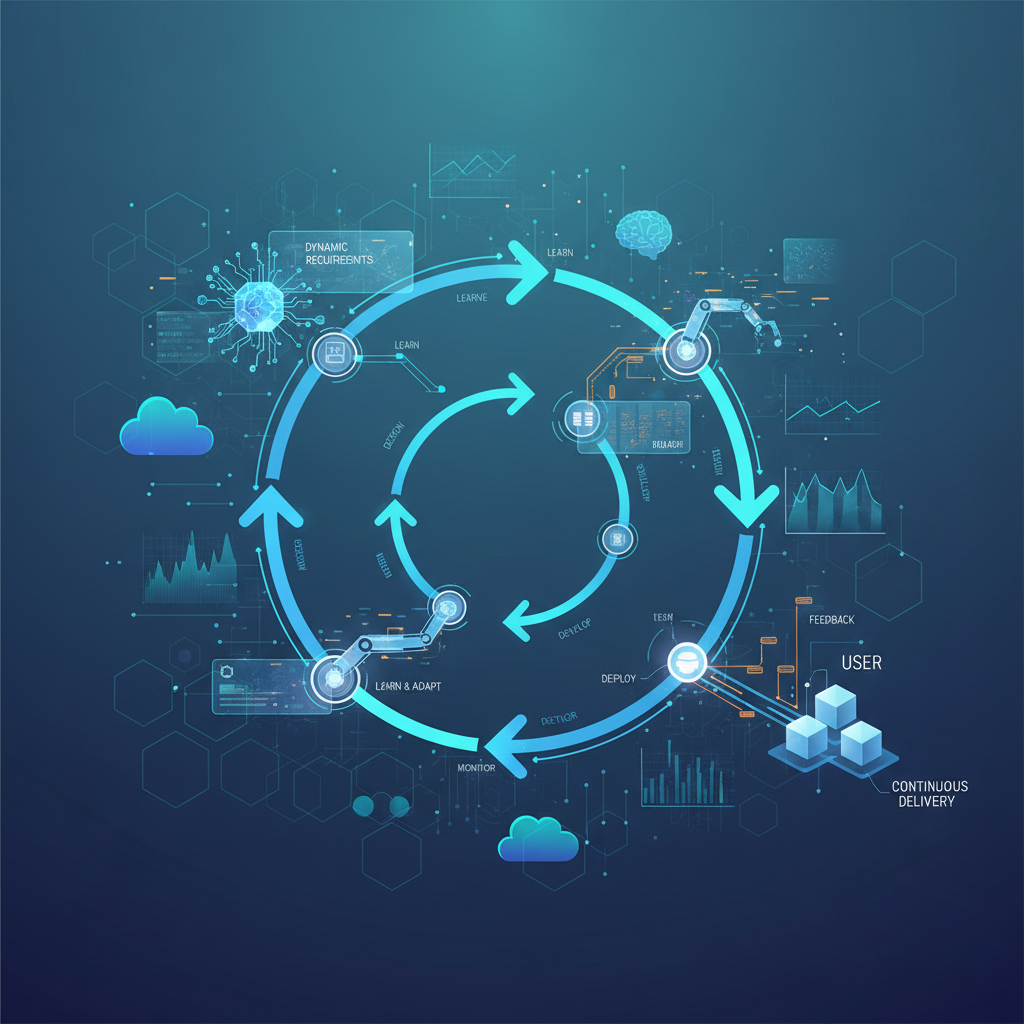
The software development lifecycle (SDLC) has long been a structured, human-centric process, evolving from Waterfall to Agile and DevOps. While these methodologies have brought significant improvements in speed and quality, they still rely heavily on human intervention for critical tasks like debugging, performance optimization, and continuous evolution. Enter the next frontier: the Self-Healing and Adaptive Agentic SDLC. This paradigm shift moves beyond mere code generation, envisioning a future where software systems can autonomously diagnose issues, propose fixes, optimize performance, and even refactor themselves, all orchestrated by intelligent multi-agent systems.
This isn't science fiction; it's the logical progression of AI's integration into software engineering, driven by the remarkable capabilities of large language models (LLMs) and the burgeoning field of multi-agent architectures.
The Imperative for Autonomous Software Systems
The journey of Agentic SDLC began with agents assisting developers in generating code snippets or entire functions from prompts. While powerful, this was just the first step. The true revolution lies in agents that can understand, diagnose, and fix issues within existing, complex codebases autonomously. Several factors make this not just interesting, but an urgent necessity:
- Beyond Reactive Maintenance: Traditional SDLC is inherently reactive. An issue arises, an alert fires, and a human engineer investigates. Self-healing agents promise a proactive approach, identifying and resolving problems before they escalate, minimizing downtime, and drastically improving system reliability.
- Tackling Technical Debt: Every software project accumulates technical debt – suboptimal code, outdated dependencies, and design flaws that hinder future development. Autonomous refactoring and optimization agents offer a continuous mechanism to improve code quality, preventing debt from crippling innovation.
- The Rise of Multi-Agent Frameworks: The theoretical concept of intelligent agents collaborating has been around for decades. However, the practical realization has been accelerated by frameworks like AutoGen, CrewAI, and LangChain, making it feasible to design and deploy teams of specialized agents for complex tasks.
- Foundation Model Prowess: Modern LLMs (e.g., GPT-4, Claude 3, Gemini) are not just sophisticated chatbots. Their advanced reasoning, code understanding, and generation capabilities make them powerful "brains" for these agents, enabling them to analyze complex code, generate coherent solutions, and even understand system-level implications.
- Economic and Scale Pressures: As software systems grow exponentially in complexity and scale, human-only maintenance becomes prohibitively expensive and prone to errors. Autonomous solutions offer a pathway to significant cost savings, improved efficiency, and the ability to manage systems that are simply too vast for human teams alone.
- Evolution of DevOps and SRE: This trend is a natural extension of DevOps and Site Reliability Engineering (SRE) principles. By automating more sophisticated operational tasks, it pushes the boundaries of continuous delivery and operational excellence.
Under the Hood: Emerging Trends and Technical Foundations
The self-healing Agentic SDLC is built upon several cutting-edge developments:
-
Specialized Agent Roles: The monolithic "coder agent" is giving way to a sophisticated team. Imagine a
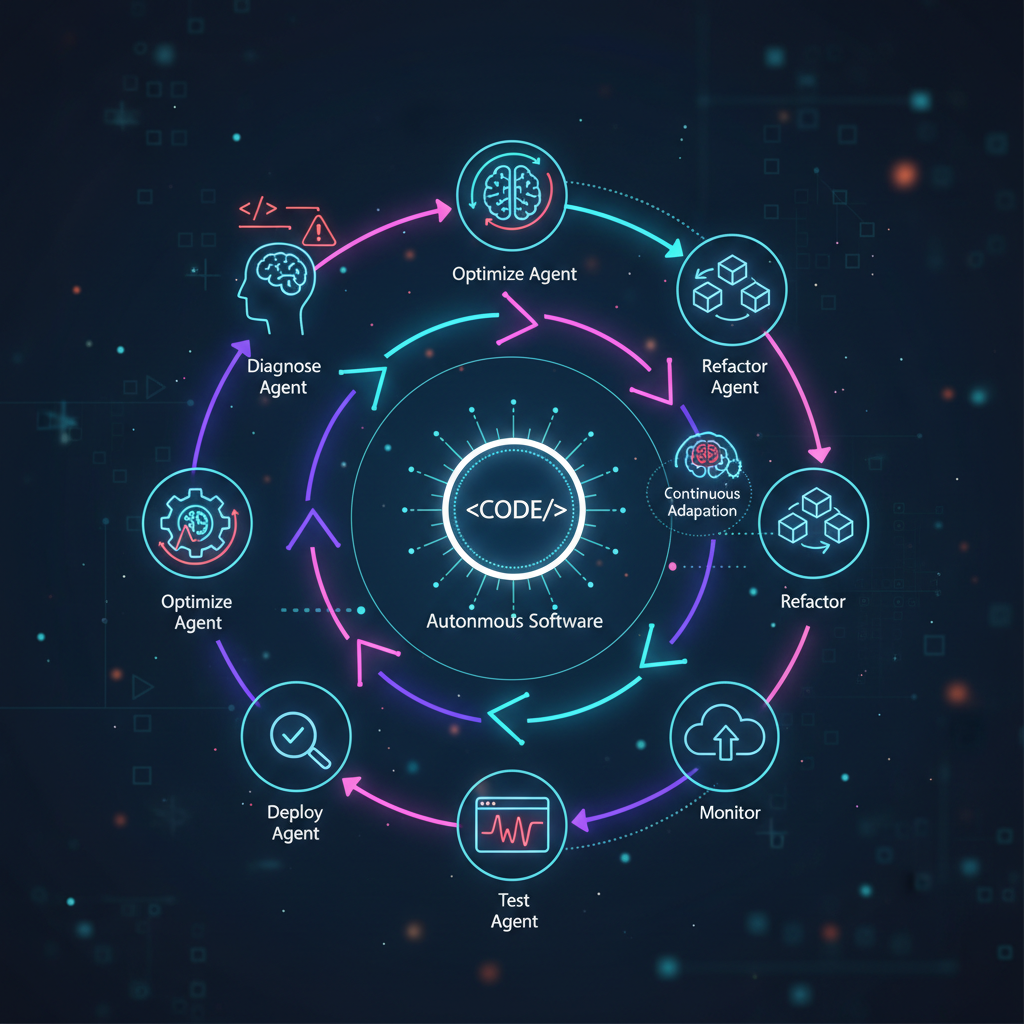
Diagnostician Agentanalyzing logs, aFixer Agentproposing code changes, aTester Agentvalidating the solution, and aRefactor Agentcontinuously improving code quality. This division of labor mirrors human teams and allows for greater efficiency and expertise. -
Feedback Loops and Reinforcement Learning: A critical component is the ability for agents to learn from their actions. This involves explicit feedback mechanisms: "Did my proposed fix pass all tests?" "Did the performance optimization actually improve latency?" This data fuels a form of online reinforcement learning, allowing agents to adapt and refine their strategies over time, moving beyond static rule sets.
-
Integration with Observability Stacks: For agents to "see" and "understand" the system's health, tight integration with existing observability tools is paramount. Monitoring systems (Prometheus, Grafana), logging platforms (ELK Stack, Splunk), and tracing tools (OpenTelemetry, Datadog) provide the real-time operational data that agents analyze to detect anomalies, pinpoint root causes, and validate fixes.
-
Semantic Code Understanding: Beyond syntactic analysis, agents are leveraging advanced parsing, Abstract Syntax Trees (ASTs), and semantic analysis to grasp the intent behind the code. This deeper understanding is crucial for effective debugging, refactoring, and ensuring that proposed changes align with the system's architectural goals, not just its surface-level structure.
-
Human-in-the-Loop (HITL) Architectures: While the goal is autonomy, practical implementations recognize the need for human oversight. HITL architectures involve strategic approval points, especially for critical changes or deployments. This ensures safety, maintains control, and allows humans to intervene when agents encounter novel or highly sensitive situations.
-
"Cognitive Architectures" for Agents: Research is exploring how to endow agents with more sophisticated "thinking" processes. This includes planning (breaking down complex problems), reflection (evaluating their own actions and reasoning), and self-correction, moving beyond simple prompt-response loops towards more robust, intelligent behavior.
-
Formal Verification Integration: An ambitious future direction involves integrating agents with formal verification tools. This could allow agents to not only generate code but also generate formal proofs of its correctness or safety, providing an unparalleled level of assurance for critical systems.
Practical Applications: The Self-Healing SDLC in Action
Let's explore how these concepts translate into tangible benefits for AI practitioners and software development teams.
1. Automated Bug Resolution
Imagine a world where your production system heals itself from common errors.
- Scenario: A critical microservice in your e-commerce platform starts throwing
DatabaseConnectionErrorexceptions, causing intermittent service outages during peak hours. - Agentic Flow:
Monitoring Agent: Integrated with your observability stack (e.g., Prometheus, Grafana), it detects a spike inDatabaseConnectionErrormetrics and logs. It triggers an incident.Diagnostician Agent: Upon receiving the incident alert, this agent accesses logs (e.g., from an ELK stack), traces (e.g., OpenTelemetry), and the relevant codebase. It analyzes stack traces, correlates error patterns with recent deployments or infrastructure changes, and identifies the root cause – perhaps a connection pool exhaustion due to an unhandled resource leak in a specific service method.Fixer Agent: Based on the diagnosis, this agent proposes a code change. For instance, it might suggest adding atry-with-resourcesblock to ensure database connections are always closed, or increasing the connection pool size in the configuration, or implementing a more robust retry mechanism with exponential backoff.Tester Agent: Before any change is applied, this agent springs into action. It generates new unit and integration tests specifically targeting the identified bug scenario and the proposed fix. It then executes these tests, alongside the existing test suite, in a sandboxed environment to validate the fix and ensure no regressions are introduced.- (Optional)
Reviewer Agent/ Human Approval: For critical production systems, aReviewer Agent(an LLM-powered agent trained on code review best practices) might perform an initial sanity check, or the proposed change is routed to a human engineer for final approval, especially if it involves significant architectural changes. Deployment Agent: Once approved, this agent automatically creates a pull request, merges the change into the main branch, triggers the CI/CD pipeline, and deploys the hotfix to production, potentially using a canary deployment strategy for safety.Monitoring Agent(Post-Deployment): Continuously monitors the system to confirm the error rate has dropped and the system is stable. If the issue persists, the cycle can restart with new diagnostic information.
2. Continuous Performance Optimization
Performance degradation can be insidious, often creeping in with new features. Autonomous agents can proactively combat this.
- Scenario: Your analytics dashboard API endpoint, which aggregates data from multiple sources, experiences a gradual increase in latency and CPU utilization over several weeks, impacting user experience.
- Agentic Flow:
Performance Monitor Agent: Observes the increasing latency and CPU usage for the specific endpoint via APM tools (e.g., Datadog, New Relic). It identifies the bottleneck and flags it.Profiler Agent: Initiates profiling sessions (e.g., using Java Flight Recorder, Python'scProfile, or eBPF tools) on the affected service in a staging environment. It gathers detailed data on function call times, memory allocations, and I/O operations.Optimizer Agent: Analyzes the profiling data. It might discover that a specific database query is inefficient, or an in-memory cache is being underutilized, or a data structure choice leads toO(N^2)complexity whereO(N log N)is possible. It then suggests code modifications, such as adding an index to a database column, implementing a Redis cache layer, or refactoring an algorithm.Tester Agent: Generates and executes performance benchmarks against the proposed optimization in a dedicated performance testing environment. It compares the new latency and resource consumption metrics against baselines to ensure a measurable improvement without introducing regressions.Refactor Agent: If the optimization involves structural changes, this agent applies the optimized code, ensuring it adheres to coding standards and architectural principles.Deployment Agent: Deploys the optimized version, potentially with A/B testing to validate real-world impact.
3. Proactive Technical Debt Management
Technical debt is a silent killer of productivity. Agents can act as tireless code stewards.
- Scenario: Over time, your codebase accumulates complex functions, duplicate logic, and outdated library dependencies, making it harder to maintain and extend.
- Agentic Flow:
Code Quality Agent: Continuously scans the entire codebase (e.g., using static analysis tools like SonarQube, ESLint, or custom LLM-powered analysis) for anti-patterns, security vulnerabilities (e.g., using SAST tools), areas of high cyclomatic complexity, code duplication, and outdated dependencies. It prioritizes findings based on severity and impact.Refactor Agent: For high-priority findings, this agent proposes refactoring strategies. Examples include:- Extracting complex logic into smaller, more manageable functions.
- Consolidating duplicate code into reusable modules.
- Updating deprecated API calls or library versions.
- Simplifying conditional statements or loops.
Tester Agent: For each proposed refactoring, it ensures functional equivalence by running existing unit and integration tests. If necessary, it generates new tests to cover edge cases introduced or affected by the refactoring.Documentation Agent: After a successful refactoring, this agent updates relevant documentation (e.g., inline comments, architectural diagrams, READMEs) to reflect the changes, ensuring the documentation remains current.Reviewer Agent/ Human Approval: Refactoring can be risky. Changes are often routed for human review before being merged to ensure architectural alignment and prevent unintended side effects.
4. Adaptive System Configuration
Modern cloud-native applications require dynamic configuration to handle fluctuating loads.
- Scenario: Your microservice experiences unpredictable traffic spikes, requiring dynamic scaling and configuration adjustments to maintain optimal performance and cost efficiency.
- Agentic Flow:
Traffic Monitor Agent: Observes incoming request rates, latency, and resource utilization across your services and infrastructure (e.g., Kubernetes metrics, cloud provider metrics).Scaler Agent: Based on predefined policies and real-time load, this agent adjusts infrastructure resources. For instance, it might scale up the number of Kubernetes pods for a specific service, provision additional cloud instances, or adjust database autoscaling settings.Configuration Agent: Concurrently with scaling, this agent modifies application configurations to match the new scale. This could involve increasing database connection pool sizes, adjusting cache capacities, or modifying message queue consumer counts. It then verifies that the new configurations are correctly applied and the system is stable.Cost Optimization Agent(Long-term): Over time, this agent might analyze usage patterns and suggest more cost-effective resource allocations or instance types, or even propose architectural changes for better efficiency.
Challenges and the Road Ahead
While the promise is immense, the path to fully autonomous, self-healing systems is not without hurdles:
- Hallucinations and Safety: The primary concern with LLM-powered agents is their propensity for "hallucinations" – generating plausible but incorrect information. In a self-healing context, this could mean introducing new, subtle, and potentially critical bugs or security vulnerabilities. Robust testing, formal verification, and stringent human-in-the-loop protocols are essential.
- Context Window Limitations: LLMs have finite context windows. Analyzing vast codebases, complex system interactions, and extensive historical data simultaneously can exceed these limits, requiring sophisticated context management and retrieval-augmented generation (RAG) techniques.
- Cost of Inference: Running complex multi-agent systems with multiple large LLMs for continuous monitoring, diagnosis, and resolution can be computationally expensive, impacting operational costs.
- Explainability: When an agent makes a complex fix or optimization, understanding why it made that specific decision can be challenging. This lack of explainability can hinder debugging the agents themselves and erode trust.
- Generalization: Training agents to handle the immense diversity of programming languages, frameworks, architectural patterns, and domain-specific logic across different organizations is a significant challenge.
- Ethical Considerations: As autonomous systems gain more control over critical software infrastructure, ethical questions arise. Who is responsible when an agent makes a mistake? How do we ensure fairness and prevent bias in automated decisions?
Conclusion
The Self-Healing and Adaptive Agentic SDLC represents a monumental leap forward in software engineering. It moves us beyond simply building software to nurturing systems that can live, adapt, and evolve with minimal human intervention. For AI practitioners, this field offers fertile ground for research in multi-agent systems, reinforcement learning applied to code, robust AI safety, and novel architectures. For software enthusiasts and developers, it's a glimpse into a future where the tedious, repetitive, and often stressful aspects of system maintenance are increasingly handled by intelligent agents, freeing human creativity for innovation and complex problem-solving.
While challenges remain, the rapid pace of AI innovation suggests that autonomous, self-healing software systems are not a distant dream, but an inevitable reality that will redefine the very nature of software development. The era of truly adaptive software is upon us.