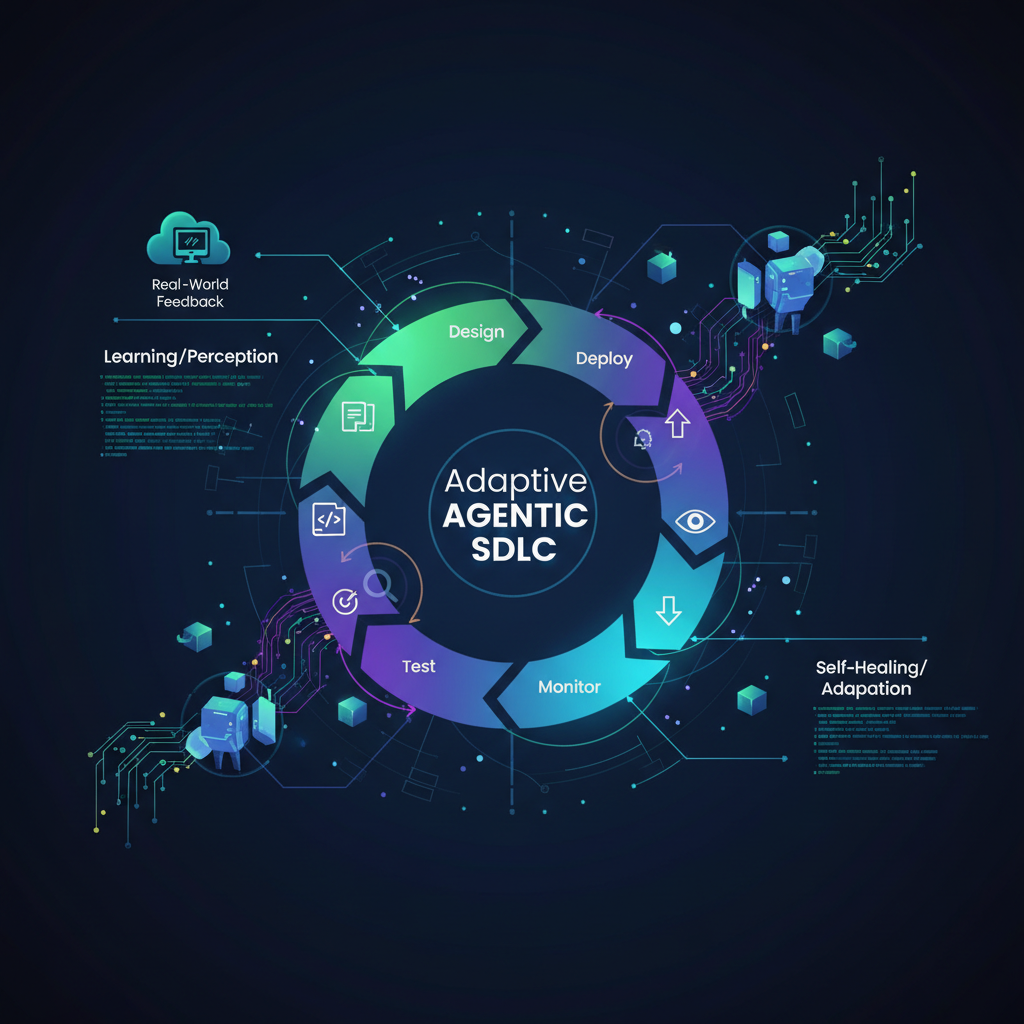
Self-Healing & Adaptive Agentic SDLC: The Future of Autonomous Software Systems
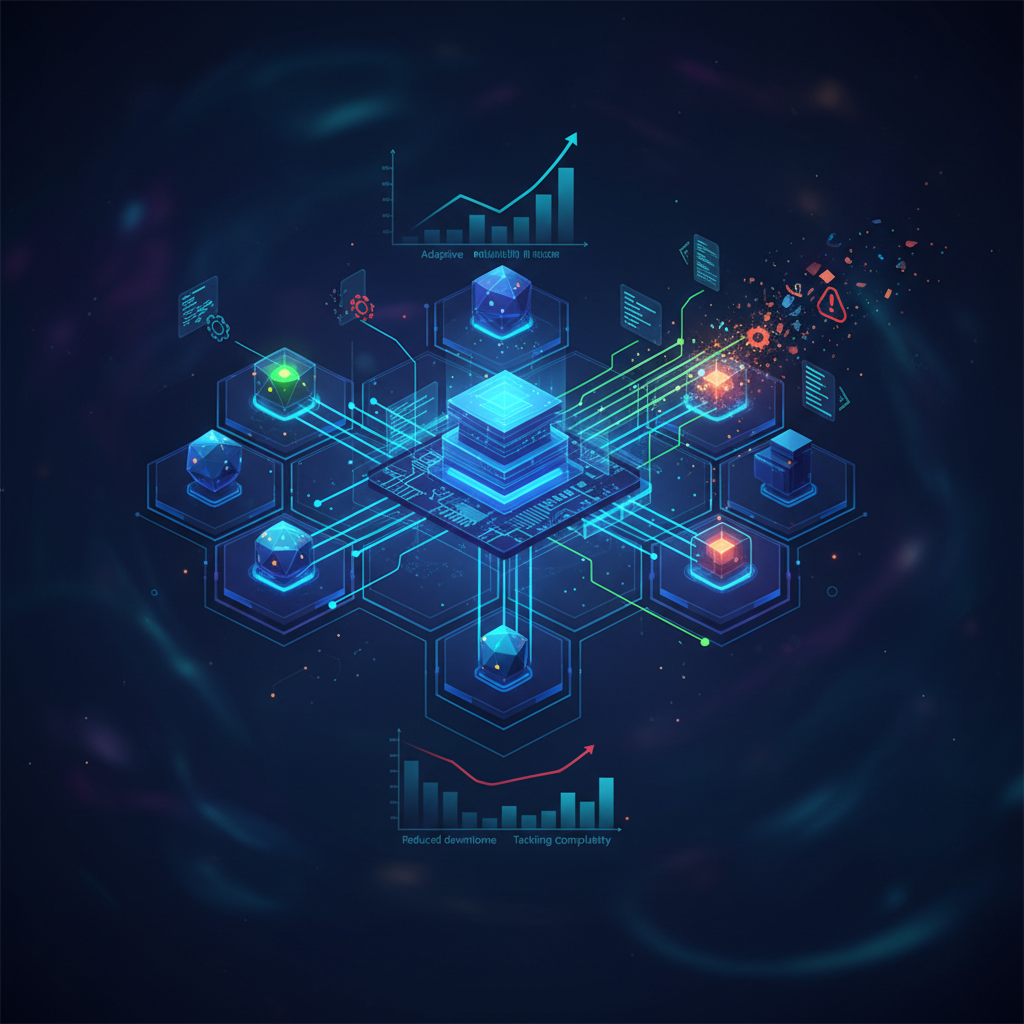
Discover Self-Healing and Adaptive Agentic SDLC, a revolutionary approach using AI agents to autonomously detect, diagnose, and fix software issues. This method promises to tackle complexity, reduce downtime, and enhance reliability.
The digital world runs on software, and as these systems grow in complexity, scale, and interconnectedness, the challenges of maintaining their health and performance escalate dramatically. Manual monitoring, debugging, and incident response are becoming unsustainable, leading to costly downtime, developer burnout, and frustrated users. Imagine a future where your software systems don't just alert you to problems, but actively diagnose, fix, and even learn from them, all with minimal human intervention. This isn't science fiction; it's the promise of Self-Healing and Adaptive Agentic SDLC.
This revolutionary approach leverages the power of AI agents to autonomously detect anomalies, pinpoint root causes, and remediate issues in software systems. It sits at the exciting confluence of generative AI, advanced observability, adaptive systems, and autonomous operations, pushing the boundaries of what's possible in software reliability.
The Unbearable Weight of Software Complexity
Modern software architectures, characterized by microservices, distributed systems, and cloud-native deployments, are incredibly dynamic. A single user request might traverse dozens of services, databases, and network hops. When something breaks, identifying the culprit amidst this intricate web is like finding a needle in a haystack – a haystack that's constantly shifting.
Traditional SDLC (Software Development Life Cycle) often reacts to incidents. An alert fires, an on-call engineer is paged, and a frantic investigation begins. This "firefighting" approach is costly in terms of human hours, system downtime, and potential reputational damage. The Mean Time To Resolution (MTTR) can stretch, impacting business operations and customer satisfaction.
Enter the era of AI agents. By empowering these intelligent entities to observe, analyze, and act, we can shift from a reactive stance to a proactive, and even predictive, one. This paradigm promises to significantly reduce MTTR, enhance system reliability, and free up valuable engineering time for innovation rather than incident management.
The AI Agent Toolkit: Enabling Technologies for Autonomy
The vision of self-healing systems isn't new, but the maturity of several key AI and software engineering technologies has made it a practical reality:
-
Large Language Models (LLMs): The advent of powerful LLMs like GPT-4, Claude 3, and Gemini has been a game-changer. These models can understand and interpret complex natural language and code. They can parse cryptic log messages, analyze error stacks, comprehend documentation, and even generate coherent code patches. Their ability to reason over diverse data types is central to autonomous root cause analysis and remediation.
-
Agentic Frameworks: Tools such as AutoGen, CrewAI, and LangChain Agents provide the architectural scaffolding to build sophisticated multi-agent systems. These frameworks facilitate agent communication, task orchestration, and collaborative problem-solving, allowing us to design "crews" of specialized agents working together.
-
Observability Tools: The bedrock of any self-healing system is comprehensive observability. Modern platforms like Datadog, New Relic, Grafana, and OpenTelemetry provide rich, real-time streams of logs, metrics, and traces. This telemetry data is the "sensory input" that AI agents consume to understand system behavior, detect anomalies, and diagnose issues. Without high-quality, granular observability, agents would be operating blind.
-
Code Generation & Refactoring: AI's capability to generate, test, and refactor code has advanced rapidly. This is crucial for autonomous remediation, as agents can propose and even implement code fixes or configuration changes directly.
These technologies, working in concert, form the foundation upon which truly adaptive and self-healing systems can be built.
The Multi-Agent Orchestra: A Symphony of Specialization
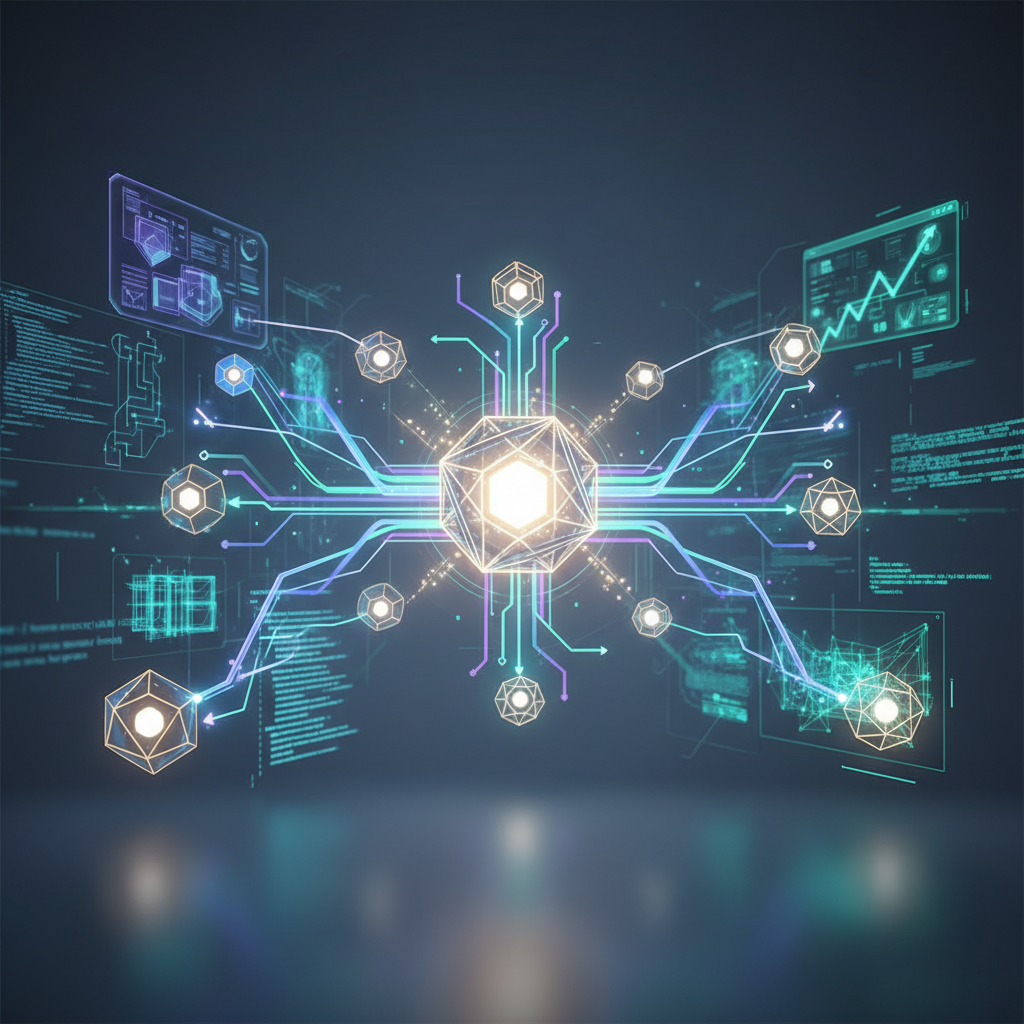
The most effective self-healing systems aren't built around a single, monolithic AI. Instead, they leverage a "crew" of specialized agents, each with a distinct role, collaborating much like a human incident response team. This multi-agent orchestration allows for complex problem-solving and robust decision-making.
Let's explore the typical roles within such an agentic orchestra:
-
Monitoring Agent: This agent is the system's vigilant sentinel. It continuously ingests telemetry data (logs, metrics, traces) from all connected services. Using sophisticated machine learning models, it identifies deviations from normal behavior – anomalies that might indicate an impending or active issue. For instance, a sudden spike in error rates, an unexpected drop in throughput, or unusual resource consumption patterns would trigger its attention.
-
Diagnostic Agent: Once an anomaly is flagged, the Diagnostic Agent springs into action. Its primary goal is Root Cause Analysis (RCA). It correlates data across different telemetry sources, analyzes log patterns, traces requests to identify bottlenecks, and queries knowledge bases or documentation. Leveraging LLMs, it can interpret complex error messages and contextually understand the system's state to pinpoint the exact component or code segment causing the problem.
- Example: A Monitoring Agent detects high latency in an API. The Diagnostic Agent might then analyze traces for that API, identifying a specific database query taking too long. It then cross-references database logs for that query, potentially finding a missing index or a recent schema change that introduced the performance degradation.
-
Planning Agent: With the root cause identified, the Planning Agent formulates a remediation strategy. This involves considering various potential actions (e.g., scaling up resources, restarting a service, rolling back a deployment, applying a configuration change) and evaluating their potential impact and risks. It might consult past incident data to prioritize effective solutions.
-
Code Generation Agent: If the remediation involves a code fix or a configuration update, the Code Generation Agent takes over. Given the diagnosed problem and the desired fix strategy, it generates the necessary code snippet, configuration file change, or infrastructure-as-code modification. This could range from a simple bug fix to a more complex refactoring.
- Example: If the Diagnostic Agent identified a null pointer exception in a specific function, the Code Generation Agent could propose a
nullcheck and appropriate error handling.
- Example: If the Diagnostic Agent identified a null pointer exception in a specific function, the Code Generation Agent could propose a
-
Testing Agent: Before any proposed fix is applied, the Testing Agent ensures its correctness and safety. It generates and executes unit tests, integration tests, or even end-to-end tests specifically tailored to validate the fix and prevent regressions. This is a critical safeguard against introducing new problems.
- Example: For a generated code fix, the Testing Agent would create a new test case that specifically triggers the original bug, then asserts that the fix resolves it without introducing side effects.
-
Deployment Agent: Once a fix is validated, the Deployment Agent manages its rollout. This might involve deploying the fix to a staging environment first, performing canary deployments to a small subset of users, or even A/B testing different solutions to observe their real-world impact. It integrates with existing CI/CD pipelines.
-
Review/Approval Agent (Human-in-the-Loop): For critical changes or high-impact incidents, human oversight is paramount. The Review/Approval Agent presents the findings, proposed actions, and test results to a human operator for final approval. This ensures safety, compliance, and builds trust in the autonomous system. It provides a clear audit trail and explanation of the agent's reasoning.
This collaborative reasoning, where agents communicate and share context, mimics the efficiency of a well-oiled human incident response team, but at machine speed and scale.
Beyond Reactive: Adaptive Learning and Contextual Understanding
The true power of adaptive agentic SDLC lies in its ability to learn and evolve:
-
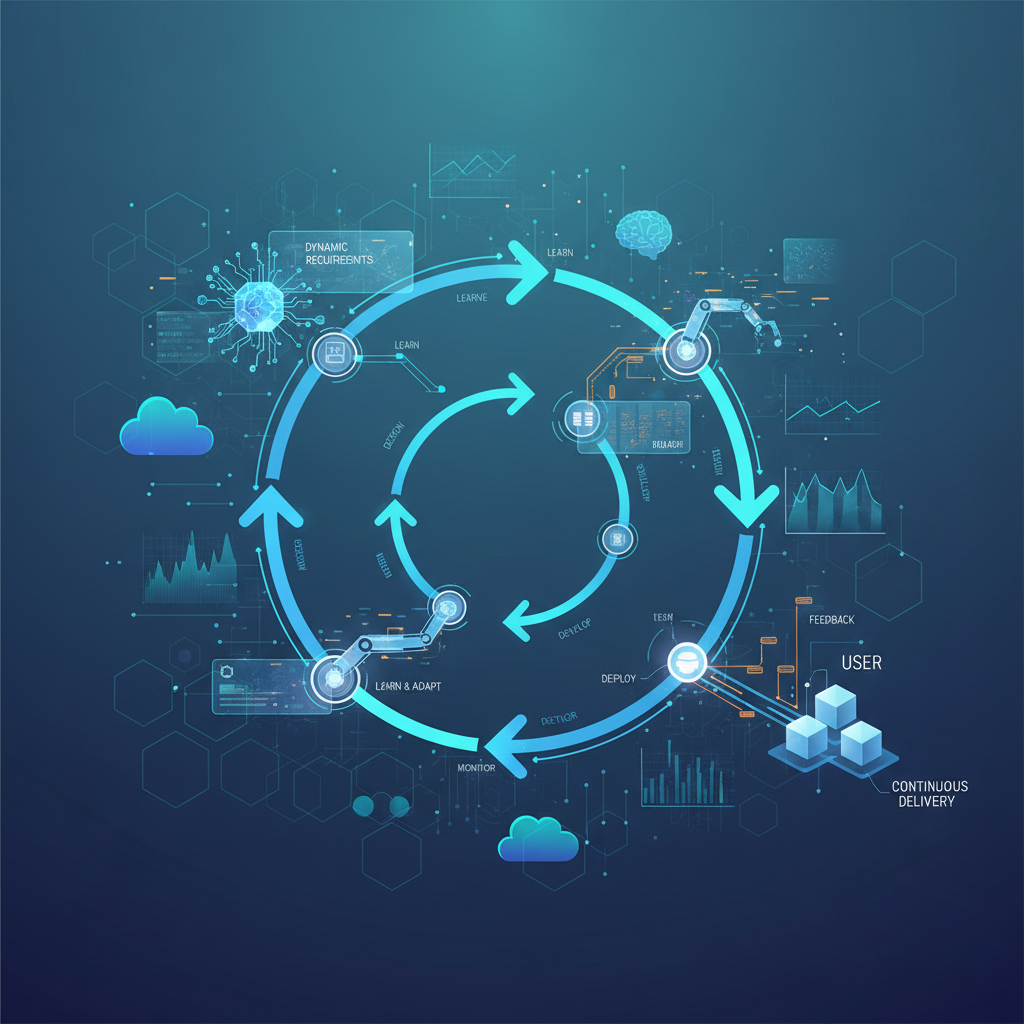
Reinforcement Learning for Adaptive Remediation: Agents don't just apply fixes; they learn from the outcomes. If a remediation strategy successfully resolves an issue, the agent reinforces that approach for similar future incidents. If a fix fails or introduces new problems, the agent learns to avoid that strategy and explores alternatives. This continuous feedback loop allows the system to adapt to evolving software behaviors, environmental changes, and even new types of failures. It's a journey from "fix it" to "fix it better next time."
-
Contextual Understanding and Semantic Search: Early AI systems might rely on keyword matching. Modern agents, powered by LLMs and Retrieval Augmented Generation (RAG), go far beyond. They understand the meaning of error messages, log patterns, and code snippets. They can query relevant documentation, architectural diagrams, and past incident reports using semantic search, providing a richer context for diagnosis and planning. This allows agents to "understand" the system in a way that was previously only possible for experienced human engineers.
- Example: Instead of just searching for "database error," an agent might understand that "connection refused on port 5432" implies a network or configuration issue with the PostgreSQL database, and then retrieve relevant network policies or database connection string documentation.
-
"Code-to-Fix" Pipelines: The ultimate goal is an end-to-end autonomous pipeline:
- An anomaly is detected.
- The problematic code segment is identified.
- A code fix is generated.
- Unit/integration tests are created and executed for the fix.
- If tests pass, the fix is proposed or even automatically applied (e.g., via a pull request to a Git repository).
- The system monitors the impact of the fix.
Practical Applications and Value for Practitioners
For AI practitioners, software engineers, and DevOps professionals, this field offers immense opportunities:
- Prototyping Autonomous Incident Response: Start small. Use frameworks like AutoGen or LangChain to build prototypes that simulate incident detection, diagnosis, and remediation in a controlled environment. This could be a simple web service with an intentional bug.
- Developing Specialized Agents: Focus on creating highly specialized agents for specific domains. For example, an agent trained specifically on database performance issues, another for network latency problems, or one for front-end JavaScript errors. These agents can leverage deep domain-specific knowledge.
- Data Engineering for Agentic Systems: A critical, often overlooked, aspect is the data pipeline. Design robust pipelines to feed real-time telemetry, codebases, documentation, and past incident data to your agents. Data quality and accessibility are paramount.
- Evaluating LLM Capabilities for Debugging: Benchmark different LLMs (and their fine-tuned versions) on their ability to perform root cause analysis and generate correct code fixes from various error scenarios. This helps in selecting the right model for specific tasks.
- Human-in-the-Loop (HITL) Systems: Design intuitive interfaces and workflows where agents propose solutions but require human approval for critical changes. This is essential for safety, control, and building trust.
- Ethical AI and Safety Engineering: This is not just a theoretical concern. Research and implement safeguards to prevent agents from introducing new bugs, causing cascading failures, or making unauthorized changes. This involves robust testing, rollback mechanisms, and clear boundaries for agent autonomy.
- Performance Optimization: Beyond fixing bugs, agents can be trained to identify and suggest optimizations for code performance, resource utilization, and scalability, acting as an always-on performance engineer.
Challenges and the Road Ahead
While the promise is immense, the path to fully autonomous, self-healing systems is not without its hurdles:
- Hallucinations and Incorrect Fixes: LLMs, despite their power, can "hallucinate" or generate incorrect information. Ensuring the reliability and correctness of AI-generated fixes is a significant challenge. Robust testing, validation, and human-in-the-loop mechanisms are crucial.
- Security Implications: Granting autonomous agents write access to production systems introduces significant security risks. A compromised or misconfigured agent could cause widespread damage. Secure design, access controls, and auditing are paramount.
- Complexity of Real-World Systems: Generalizing agents to handle the vast diversity and complexity of real-world software architectures, programming languages, and technologies is a monumental task. Every system has its quirks.
- Learning from Scarce Data: Many critical incidents are rare. Agents need to learn effectively from limited examples and generalize well to novel situations, which is a challenge for data-hungry ML models.
- Cost of Operation: Running sophisticated multi-agent systems with powerful LLMs can be computationally expensive, especially for continuous monitoring and analysis. Optimizing cost-effectiveness will be key.
- Explainability and Trust: For engineers to trust and adopt these systems, agents must not only fix issues but also explain why they took certain actions. Providing clear summaries of their thought process, the evidence used, and potential risks is essential for building confidence and for auditing purposes.
Conclusion: The Dawn of Autonomous Software Resilience
Self-healing and adaptive agentic SDLC represents a profound shift in how we build, operate, and maintain software. It moves us beyond mere automation to true autonomy, where intelligent agents act as vigilant guardians, proactive diagnosticians, and skilled remediators of our increasingly complex digital infrastructure.
This field demands a multidisciplinary approach, blending the cutting edge of AI/ML with the practical realities of software engineering, DevOps, and Site Reliability Engineering. For practitioners and enthusiasts, it offers a fertile ground for innovation, where theoretical AI advancements translate directly into immediate, high-impact practical applications that reduce downtime, lower operational costs, and enhance the overall reliability and resilience of our software-driven world. The future of software is not just intelligent; it's self-aware, self-correcting, and endlessly adaptive.